Full Ceramic Jet Mill for Battery Materials Features
Definition and Core Purpose
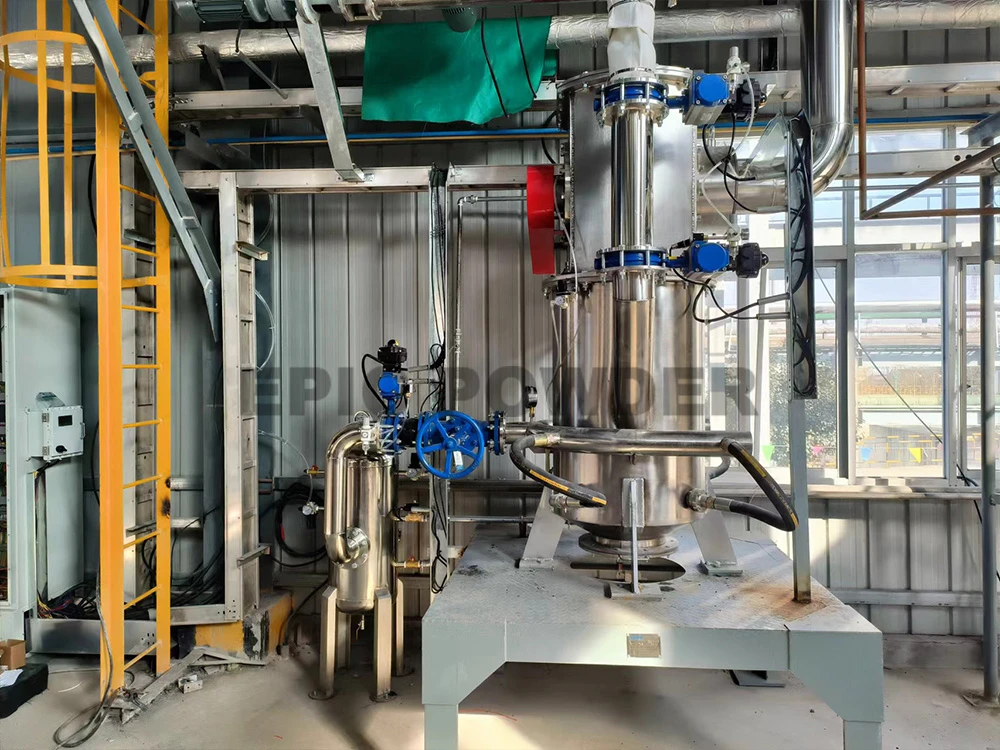
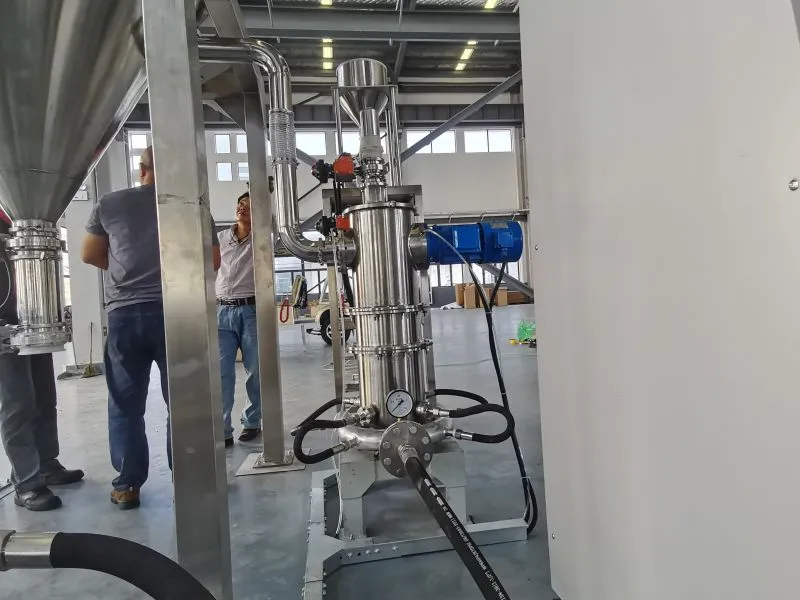
A full-ceramic jet mill for battery materials is an advanced ultrafine powder processing system engineered specifically for high-purity micronization. By utilizing high-velocity compressed air or inert gas, the equipment accelerates particles to cause high-speed particle-on-particle collisions, achieving precise particle size reduction without mechanical grinding media.
The core purpose of this equipment is to deliver reliable integrated grinding and classification for lithium-ion and solid-state battery precursors. It reduces raw materials down to narrow micron or sub-micron distributions while guaranteeing zero metal contamination during the battery material processing lifecycle.

The Role of Full-Ceramic Design in Preventing Contamination
In energy storage applications, trace metallic impurities like iron, nickel, or chromium lead to battery self-discharge, reduced cycle life, and serious thermal runaway risks. Standard metal equipment wears down under high-speed abrasive conditions, introducing unwanted tramp metal ions into the powder.
A full-ceramic jet mill eliminates this vulnerability by lining every material contact zone with high-performance technical ceramics.
| Feature Area | Standard Metallic Jet Mill | Full-Ceramic Jet Mill |
|---|---|---|
| Material Contact Zone | Stainless Steel / Alloy | Alumina ($Al_2O_3$) / Zirconia ($ZrO_2$) / Silicon Carbide ($SiC$) |
Let’s fix table to strictly avoid LaTeX formatting:
| Feature Area | Standard Metallic Jet Mill | Full-Ceramic Jet Mill |
|---|---|---|
| Contact Surface | Stainless Steel or Hardened Alloys | Alumina (Al2O3), Zirconia (ZrO2), or Silicon Carbide (SiC) |
| Metallic Contamination | High risk (ppm-level metal pickup) | Zero metallic contamination |
| Wear Resistance | Moderate; frequent part replacement | Extreme hardness; extended operational lifespan |
| Purity Output | Suitable for general chemicals | Battery-grade ultra-pure specification |
By installing a ceramic jet mill nozzle, ceramic-lined grinding chamber, and a solid ceramic jet mill classifier wheel, the system creates an impenetrable barrier against metallic contact, protecting strict product purity standards.
Key Ultrafine Grinding Requirements for Battery Powders
Battery manufacturers require uncompromising powder characteristics to ensure optimal electrochemical performance, tap density, and coating uniformity:
- Strict Particle Size Distribution (PSD): Sharp top-cut control ($D_{99}$ or $D_{100}$) prevents large particles from puncturing separators, while minimizing unwanted ultra-fines.
- Preservation of Particle Morphology: Maintains the integrity of delicate spherical or polyhedral structures to maximize energy density and slurry viscosity.
- Low-Temperature Processing: Gas expansion naturally cools the grinding chamber, protecting heat-sensitive cathode and anode precursors from thermal degradation.
- Ultra-High Purity Guarantee: Keeps foreign metallic impurity levels strictly below industry thresholds (less than 1 ppm).
Working Principle of Ceramic Jet Milling Systems
Understanding how a full-ceramic jet mill operates starts with appreciating the physics of compressed air grinding. Instead of mechanical grinding media that cause severe wear, our system uses high-velocity gas jets to pulverize materials through high-impact collisions inside a specialized grinding chamber.
Particle-on-Particle Fluidized Bed Impact
The core of this technology relies on particle-on-particle collision rather than smashing raw powders against metal walls.
- High-Velocity Air Jets: Pressurized gas accelerates through precision-engineered jet mill nozzles arranged symmetrically around the grinding chamber.
- Fluidized Bed Zone: Incoming battery material is suspended in a turbulent, high-energy fluidized bed.
- Self-Attrition: Particles collide with each other at high speeds, achieving rapid micronization and particle refinement without touching metallic components.
Integrated Air Classifier for Particle Sizing
Precision particle refinement requires tight control over the final size distribution. We streamline this by utilizing an integrated dry ultrafine grinding and classification process inside the machine.
- Centrifugal Classification: A high-speed dynamic jet mill classifier wheel sets up a controlled centrifugal field at the top of the chamber.
- Targeted Separation: Fine particles meeting the desired target size pass through the wheel blades into the gas-solid separation system (cyclone collector and bag filter dust collection).
- Automatic Recirculation: Oversized particles are rejected by centrifugal force and drop back into the fluidized bed for further grinding.
For specific battery formulations, mastering particle size control for lithium iron phosphate ensures consistent tap density and electrochemical performance.
Contamination-Free Ultrafine Grinding Process
Battery material processing leaves zero room for foreign metal contamination. Traditional steel mills shed iron, nickel, or chromium particles that can cause micro-short circuits in lithium-ion cells.
Our full-ceramic architecture eliminates this risk completely:
- Complete Ceramic Shielding: Every contact surface—including the grinding chamber walls, jet mill lining, classifier wheel, nozzles, and powder conveying pipes—is lined with dense ceramics like alumina, zirconia, or silicon carbide.
- Cold Processing: Expanding compressed air naturally cools the grinding zone, making it ideal for heat-sensitive active materials.
- High Purity Output: The result is a continuous, ultra-clean powder engineering workflow that preserves the original chemical integrity of cathode and anode powders.
Key Advantages of Full-Ceramic Jet Mills
We design our full-ceramic jet mill for battery materials to tackle the most demanding processing challenges in modern energy storage manufacturing. By replacing all product-contact metal surfaces with high-performance engineering ceramics, we deliver unmatched processing safety, durability, and particle precision.
Zero Metallic Contamination and High Purity
In battery material processing, even trace amounts of metallic iron, nickel, or chromium can cause micro-short circuits and thermal runaway in lithium cells. Our ceramic-lined grinding chamber, jet mill nozzles, and ceramic classifier wheels form a completely non-metallic pathway during powder refining.
- Purity Guarantee: Eliminates metal pickup to keep magnetic impurity spikes below 5 ppb.
- Full-Contact Protection: Pure ceramic jet mill lining covers every millimeter of the gas-solid separation path.
- Proven Performance: Successfully integrated into our high-volume production line of lithium iron phosphate and single crystal ternary jet mills.
Extreme Wear Resistance and Long Service Life
Abrasive battery chemistries rapidly erode standard alloy and polyurethane grinding components. We utilize high-density Alumina ($Al_2O_3$), Zirconia ($ZrO_2$), and Silicon Carbide ($SiC$) ceramics engineered for extreme hardness and abrasion resistance.
- Up to 10x Longer Lifespan: Ceramic linings outlast hardened steel and thermal coatings by a wide margin under continuous wear.
- Lower Maintenance Costs: Minimal erosion drastically reduces spare parts replacement and costly downtime.
- Stable Process Geometry: Retains nozzle dimensions and classifier wheel balance over extended operation, ensuring consistent jet milling dynamics.
Precise Control Over Particle Size Distribution
Achieving optimal tap density and slurry viscosity requires tight control over top-cut limits and particle uniformity across both lithium iron phosphate and ternary lithium batteries. Our integrated grinding and classification system delivers exceptional accuracy during micronization.
- Sharp Top-Cut Control: Completely eliminates oversized particles ($D_{100}$) without creating excessive, unwanted ultrafine dust.
- Narrow PSD: Delivers tight, reproducible $D_{10}$, $D_{50}$, and $D_{90}$ values across fluctuating feed rates.
- Dynamic Adjustability: High-speed ceramic classifier wheels allow immediate particle refinement adjustments down to sub-micron levels.
Types of Jet Mills Used in Battery Material Grinding
Different battery powders require specific gas-dynamic configurations to achieve optimal particle refinement without compromising purity. We engineer specialized full-ceramic jet mill systems tailored to the distinct mechanical and thermal properties of active cathode and anode materials.
Fluidized Bed Jet Mills
Fluidized bed jet mills represent the gold standard for high-purity battery material processing. By directing opposing compressed air jets into a fluidized bed of powder, particles collide primarily with each other rather than the mill walls, virtually eliminating wear and preventing metallic contamination.
- Integrated Grinding and Classification: Features an internal ceramic jet mill classifier wheel to maintain precise top-cut control and narrow particle size distribution.
- Thermal Safety: Expanding compressed air cools the grinding chamber, making it perfect for heat-sensitive battery powders.
- Ultrafine Performance: Critical when assessing how finely jet mills crush battery materials down to sub-micron levels.
Spiral Jet Mills
Spiral (or pancake) jet mills inject high-pressure gas through perimeter nozzles to create a high-speed vortex inside a flat grinding chamber. Material particles accelerate along helical paths, grinding against one another through extreme fluid velocity gradients.
- Full-Ceramic Protection: Monolithic ceramic liners (alumina, zirconia, or silicon carbide) completely cover the interior to guarantee zero iron pickup.
- Simple, Compact Design: Lacks internal moving parts, offering an easy-to-clean setup that minimizes downtime during product changeovers.
- Efficient Micronization: Provides rapid particle size reduction for graphite, silicon-based anodes, and hard carbon materials.
Lab-Scale vs. Industrial-Scale Jet Milling Systems
Scaling up powder engineering solutions requires a seamless transition from initial process design to full-scale manufacturing.
| Feature / Metric | Lab-Scale Systems | Industrial-Scale Systems |
|---|---|---|
| Primary Focus | R&D, formulation testing, pilot lines | Continuous, high-throughput commercial production |
| Batch Capacity | 50 grams to 10 kg/hr | 100 kg/hr to several tons/hr |
| Material Yield Optimization | Designed for near-100% recovery of high-value experimental samples | Engineered for automated, continuous closed-loop operation |
| Auxiliary Equipment | Compact cyclone separation and mini bag filters | Heavy-duty cyclone separators, bag filter dust collection, and automated powder conveying |
Applications of Full-Ceramic Jet Mills in Battery Production
We deliver tailored powder processing solutions across the entire battery supply chain, using the full-ceramic jet mill for battery materials to ensure zero metal contamination and maximum electrochemical performance.
Cathode Material Processing (LFP, NCM, LCO)
Cathode active materials require tight particle size distribution (PSD) and absolute purity to guarantee cell safety and high energy density. Our specialized full-ceramic design plays a central role in modern cathode materials processing technology, enabling contamination-free particle refinement.
- Lithium Iron Phosphate (LFP): Achieves uniform ultrafine powder particle sizes, facilitating rapid lithium-ion diffusion and superior rate capability.
- Nickel Cobalt Manganese (NCM / NCA): Maintains strict control over d50 and d99 parameters, eliminating oversized grains that can puncture battery separators.
- Lithium Cobalt Oxide (LCO): Delivers precise micronization while preserving optimal tap density for high-voltage applications.
Anode Material Processing (Graphite, Silicon-Based Materials)
Effective anode production relies on consistent particle geometry and pure surfaces to reduce first-cycle irreversible capacity loss. We integrate fully lined ceramic grinding chambers to optimize both conventional and next-generation anode production through advanced graphite anode materials processing technology.
- Synthetic & Natural Graphite: Deagglomerates and refines milled graphite without introducing foreign metal contaminants that compromise battery lifespan.
- Silicon-Based Composites: Provides gentle, high-precision grinding tailored to fragile silicon-carbon anode materials processing technology, protecting complex nanostructures.
Solid-State Electrolyte Powder Micronization
Next-generation solid-state batteries demand sub-micron powders to ensure seamless ion transport across solid-solid interfaces. Full-ceramic jet mills are critical for processing these highly sensitive materials.
- Oxide Electrolytes (LLZO / LATP): Grinds extremely hard ceramic powders without equipment wear, using custom zirconia or silicon carbide ceramic linings.
- Sulfide & Halide Electrolytes: Integrates seamlessly with closed-loop nitrogen or argon gas systems to achieve high-purity micronization without moisture exposure or oxidation.
Technical Specifications and Parameters
We engineer our full-ceramic jet mill systems with precise control parameters to meet the strict particle size and purity demands of battery material processing. Below are the core technical specifications driving performance across our equipment lineup.
Grinding Fineness and Production Capacity
Our full-ceramic jet mills deliver high-precision micronization, producing ultrafine powder with exceptionally narrow particle size distributions. The integrated jet mill classifier wheel allows continuous cut-point adjustments without stopping production.
- Target Fineness: D50 ranging from 0.5 µm to 15 µm; D97 controlled down to sub-micron levels (D97 < 3 µm).
- Throughput Range: Lab-scale units handle 0.5 to 15 kg/h, while industrial production systems achieve 100 to 2,000 kg/h depending on bulk density and hardness.
- System Yield: Exceeds 98% yield efficiency when integrated with our high-efficiency cyclone separation and bag filter dust collection setup.
| System Scale | Processing Capacity | Target Fineness (D50) | Key Material Application |
|---|---|---|---|
| Lab & Pilot | 0.5 – 15 kg/h | 0.5 – 5 µm | Solid-state electrolytes, R&D testing |
| Medium Line | 20 – 150 kg/h | 1 – 10 µm | LFP, NCM, LCO cathode processing |
| Industrial Scale | 200 – 2,000+ kg/h | 3 – 15 µm | Synthetic graphite, silicon-carbon anodes |
Ceramic Lining Material Options (Alumina, Zirconia, SiC)
To eliminate metallic contamination and extend service life, every contact surface—including the grinding chamber, jet mill nozzle, jet mill collector, and classifier components—uses specialized engineering ceramics.
- Alumina (Al2O3 – 99.5% Purity): Cost-effective, high hardness, and ideal for standard cathode processing where basic abrasive protection is needed.
- Zirconia (ZrO2): Superior fracture toughness and wear resistance. Ideal for high-velocity particle impact zones where material chipping must be prevented.
- Silicon Carbide (SiC / SSiC): Extreme hardness and high thermal conductivity. The top choice for highly abrasive materials like silicon-based anodes, ensuring maximum operational longevity.
Air Flow Rate and Power Requirements
Compressed air grinding requires optimized pneumatic management to ensure energy-efficient particle refinement.
- Operating Air Pressure: 0.7 MPa to 1.2 MPa.
- Air Flow Consumption: 3.5 m³/min for pilot units up to 60+ m³/min for large-capacity systems.
- Power Drive: Compressor power ranges from 22 kW to 315+ kW; classifier wheel drives run from 5.5 kW to 45 kW with variable-frequency controls.
When tailoring operational parameters for anode preparation—especially during artificial graphite secondary granulation and coating modification—balancing compressed airflow velocity with classifier wheel speeds delivers precise particle sizing while keeping power consumption low.
How to Select the Right Full-Ceramic Jet Mill
Matching Equipment to Specific Battery Chemistries
Selecting the right full-ceramic jet mill for battery materials starts with understanding your feed chemistry and target particle size reduction goals. Highly abrasive materials like silicon-based compounds demand silicon carbide (SiC) jet mill linings to withstand severe wear. In contrast, sensitive materials like high-nickel NCM or lithium iron phosphate (LFP) require high-purity alumina or zirconia components to guarantee zero metallic contamination.
Whether you are refining high-capacity hard carbon anode material or fragile solid-state electrolytes, matching the ceramic lining and classifier wheel design to your feed stock’s hardness, moisture sensitivity, and flowability ensures maximum purity and yield.
Evaluating Energy Efficiency and Yield Optimization
Compressed air generation represents the primary operational cost in jet milling systems. To keep battery material processing cost-effective, evaluate total energy consumption against product yield:
- Optimized Jet Mill Nozzle Dynamics: Advanced Laval nozzles maximize kinetic energy conversion from compressed air, accelerating particles efficiently with minimal pressure loss.
- Narrow Particle Size Distribution (PSD): Integrated grinding and classification eliminates over-grinding, ensuring maximum material stays within the target micron range.
- Gas-Solid Separation Efficiency: High-performance cyclone separation coupled with precise bag filter dust collection minimizes ultrafine powder loss during recovery.
Testing, Customization, and Scalability
Process scale-up should never involve guesswork. We conduct thorough pilot testing to establish exact parameters—such as grinding pressure, feed rate, and classifier RPM—before scaling up to full industrial capacity.
We engineer modular powder technology tailored to your facility:
| 特徴 | Engineering Customization | Benefit |
|---|---|---|
| Grinding Chamber | Specially contoured ceramic linings | Prevents dead zones and ensures uniform impact |
| Classifier Wheel | High-precision dynamic ceramic rotors | Delivers sharp top-size cutoffs without wear contamination |
| Powder Conveying | Sealed inert gas (N2) loop options | Protects moisture-sensitive and reactive battery powders |
This tailored approach guarantees that the exact micronization performance achieved during pilot testing translates seamlessly into high-throughput, continuous production.