Broyeur à jet entièrement en céramique pour matériaux de batteries : caractéristiques
Définition et objectif principal
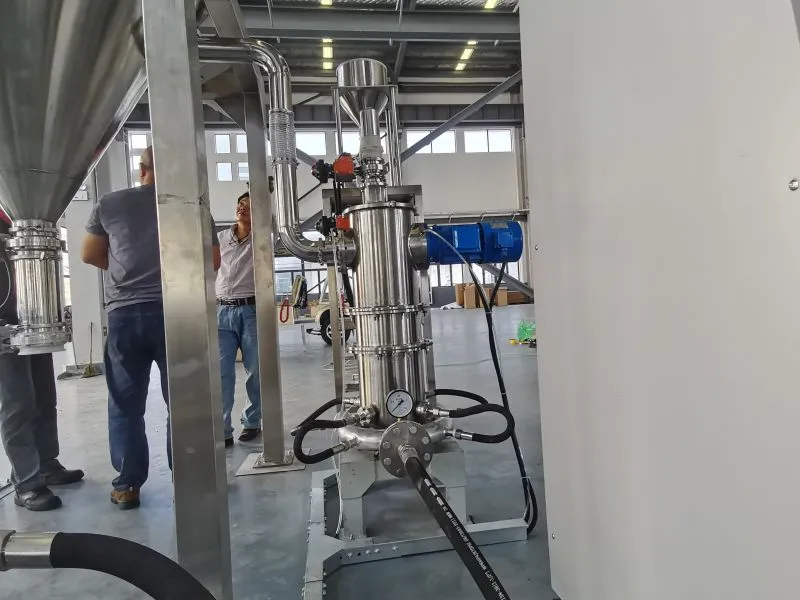
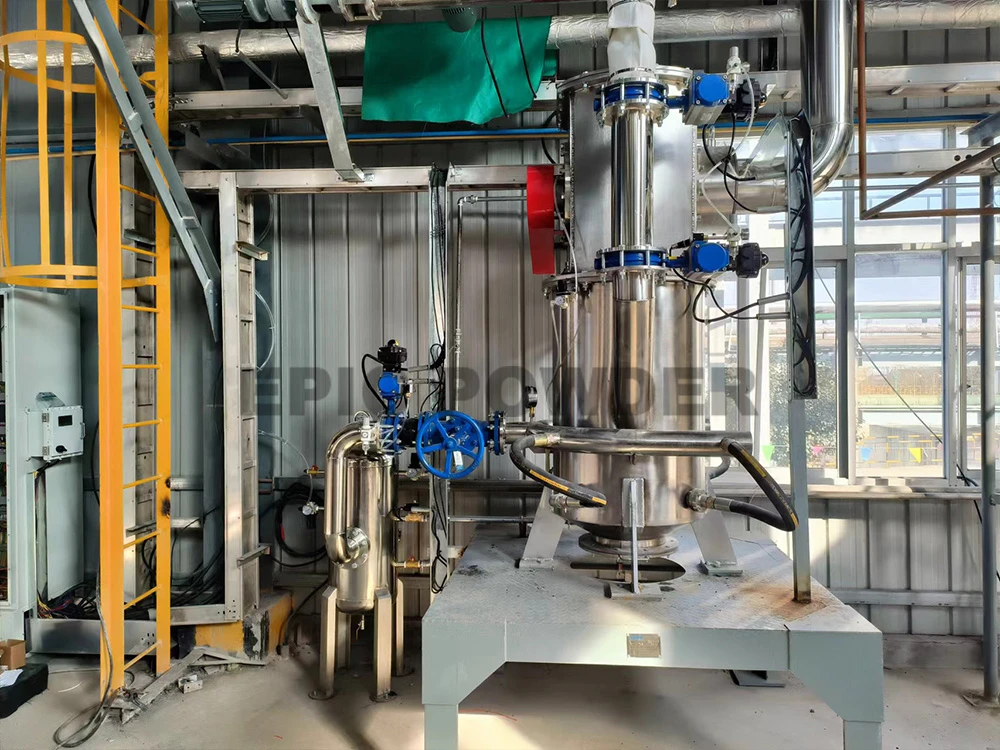
UN broyeur à jet entièrement en céramique pour matériaux de batteries Il s'agit d'un système de traitement de poudres ultrafines de pointe, conçu spécifiquement pour la micronisation de haute pureté. Utilisant de l'air comprimé à haute vitesse ou un gaz inerte, l'équipement accélère les particules pour provoquer des collisions à grande vitesse entre elles, permettant ainsi d'obtenir une micronisation précise. réduction de la taille des particules sans média de broyage mécanique.
L'objectif principal de cet équipement est de fournir une fiabilité broyage et classification intégrés pour les précurseurs de batteries lithium-ion et à l'état solide. Il réduit les matières premières à des distributions granulométriques micrométriques ou submicrométriques étroites tout en garantissant une absence totale de contamination métallique pendant le processus. traitement des matériaux de batteries cycle de vie.
Le rôle de la conception entièrement céramique dans la prévention de la contamination
Dans les applications de stockage d'énergie, les impuretés métalliques à l'état de traces, comme le fer, le nickel ou le chrome, entraînent l'autodécharge des batteries, une réduction de leur durée de vie et de graves risques d'emballement thermique. Les équipements métalliques standard s'usent sous l'effet de l'abrasion à grande vitesse, introduisant ainsi des ions métalliques indésirables dans la poudre.
Un broyeur à jet entièrement en céramique élimine cette vulnérabilité en revêtant chaque zone de contact avec les matériaux de céramiques techniques haute performance.
| Zone de présentation | Broyeur à jet métallique standard | Broyeur à jet entièrement en céramique |
|---|---|---|
| Zone de contact avec le matériau | Acier inoxydable / Alliage | Alumine ($Al_2O_3$) / Zircone ($ZrO_2$) / Carbure de silicium ($SiC$) |
Corrigeons le tableau afin d'éviter strictement la mise en forme LaTeX :
| Zone de présentation | Broyeur à jet métallique standard | Broyeur à jet entièrement en céramique |
|---|---|---|
| Surface de contact | Acier inoxydable ou alliages trempés | Alumine (Al2O3), zircone (ZrO2) ou carbure de silicium (SiC) |
| Contamination métallique | Risque élevé (capture de métaux au niveau ppm) | Aucune contamination métallique |
| Résistance à l'usure | Modéré ; remplacement fréquent des pièces | Dureté extrême; durée de vie opérationnelle prolongée |
| Pureté du débit | Convient aux produits chimiques courants | Spécifications ultra-pures de qualité batterie |
En installant une céramique buse de broyeur à jet, à revêtement céramique chambre de broyageet une céramique solide roue classificatrice de broyeur à jetLe système crée une barrière impénétrable contre tout contact métallique, garantissant ainsi le respect des normes strictes de pureté du produit.
Exigences clés en matière de broyage ultrafin pour les poudres de batteries
Les fabricants de batteries exigent des caractéristiques de poudre sans compromis pour garantir des performances électrochimiques optimales, une densité apparente et une uniformité de revêtement :
- Distribution granulométrique stricte (PSD) : Le contrôle de coupe supérieure net ($D_{99}$ ou $D_{100}$) empêche les grosses particules de perforer les séparateurs, tout en minimisant les ultrafines indésirables.
- Préservation de la morphologie des particules : Maintient l'intégrité des structures sphériques ou polyédriques délicates afin de maximiser la densité énergétique et la viscosité de la suspension.
- Traitement à basse température : La dilatation des gaz refroidit naturellement le chambre de broyage, protégeant ainsi les précurseurs thermosensibles de la cathode et de l'anode contre la dégradation thermique.
- Garantie de pureté ultra-élevée : Maintient les niveaux d'impuretés métalliques étrangères strictement en dessous des seuils de l'industrie (moins de 1 ppm).
Principe de fonctionnement des systèmes de fraisage par jet d'air céramique
Pour comprendre le fonctionnement d'un broyeur à jet entièrement céramique, il faut d'abord appréhender la physique du broyage à l'air comprimé. Contrairement aux broyeurs mécaniques qui provoquent une usure importante, notre système utilise des jets de gaz à haute vitesse pour pulvériser les matériaux par des collisions à fort impact à l'intérieur d'une chambre de broyage spécialisée.
Impact de particules sur particules dans un lit fluidisé
Le principe de cette technologie repose sur la collision entre particules plutôt que sur l'écrasement de poudres brutes contre des parois métalliques.
- Jets d'air à haute vitesse : Le gaz sous pression est accéléré par des buses de broyeur à jet de précision disposées symétriquement autour de la chambre de broyage.
- Zone à lit fluidisé : Les matériaux de la batterie entrante sont mis en suspension dans un lit fluidisé turbulent à haute énergie.
- Auto-attrition : Les particules entrent en collision à grande vitesse, permettant une micronisation et un affinement rapides des particules sans contact avec les composants métalliques.
Classificateur d'air intégré pour le calibrage des particules
Le raffinement précis des particules exige un contrôle rigoureux de la distribution granulométrique finale. Nous simplifions ce processus en utilisant un procédé intégré de broyage ultrafin à sec et de classification à l'intérieur de la machine.
- Classification centrifuge : Une roue classificatrice à jet dynamique à grande vitesse crée un champ centrifuge contrôlé au sommet de la chambre.
- Séparation ciblée : Les fines particules correspondant à la taille cible souhaitée passent à travers les pales de la roue dans le système de séparation gaz-solide (collecteur cyclone et dépoussiérage par filtre à sac).
- Recirculation automatique : Les particules surdimensionnées sont rejetées par la force centrifuge et retombent dans le lit fluidisé pour un broyage plus poussé.
Pour des formulations de batteries spécifiques, la maîtrise Contrôle de la taille des particules pour le phosphate de fer lithié assure une densité apparente et des performances électrochimiques constantes.
Procédé de broyage ultrafin sans contamination
Le traitement des matériaux des batteries ne tolère aucune contamination par des métaux étrangers. Les aciéries traditionnelles rejettent des particules de fer, de nickel ou de chrome susceptibles de provoquer des micro-courts-circuits dans les cellules lithium-ion.
Notre architecture entièrement en céramique élimine totalement ce risque :
- Blindage céramique complet : Chaque surface de contact, y compris les parois de la chambre de broyage, le revêtement du broyeur à jet, la roue du classificateur, les buses et les tuyaux de transport de poudre, est revêtue de céramiques denses comme l'alumine, la zircone ou le carbure de silicium.
- Traitement à froid : L'expansion de l'air comprimé refroidit naturellement la zone de broyage, ce qui la rend idéale pour les matériaux actifs thermosensibles.
- Production de haute pureté : Il en résulte un flux de travail d'ingénierie des poudres continu et ultra-propre qui préserve l'intégrité chimique d'origine des poudres de cathode et d'anode.
Principaux avantages des broyeurs à jet entièrement céramiques
Notre broyeur à jet entièrement céramique est conçu pour répondre aux exigences de traitement les plus strictes de la fabrication moderne de systèmes de stockage d'énergie. En remplaçant toutes les surfaces métalliques en contact avec le produit par des céramiques techniques haute performance, nous garantissons une sécurité de traitement, une durabilité et une précision particulaire inégalées.
Absence totale de contamination métallique et pureté élevée
Lors de la fabrication des matériaux pour batteries, même des traces de fer, de nickel ou de chrome peuvent provoquer des micro-courts-circuits et un emballement thermique dans les cellules au lithium. Notre chambre de broyage à revêtement céramique, nos buses de broyeur à jet et nos meules de classification en céramique créent un circuit entièrement non métallique lors du raffinage des poudres.
- Garantie de pureté : Élimine la capture de métaux pour maintenir les pics d'impuretés magnétiques en dessous de 5 ppb.
- Protection intégrale contre les contacts : Le revêtement du broyeur à jet en céramique pure recouvre chaque millimètre du trajet de séparation gaz-solide.
- Performances éprouvées : Intégré avec succès à notre production à haut volume Ligne de production de broyeurs à jet ternaires monocristallins et de phosphate de fer lithié.
Résistance extrême à l'usure et longue durée de vie
Les chimies abrasives des batteries érodent rapidement les composants de meulage en alliage standard et en polyuréthane. Nous utilisons des céramiques haute densité en alumine ($Al_2O_3$), en zircone ($ZrO_2$) et en carbure de silicium ($SiC$), conçues pour une dureté et une résistance à l'abrasion extrêmes.
- Durée de vie jusqu'à 10 fois plus longue : Les revêtements en céramique ont une durée de vie bien supérieure à celle de l'acier trempé et des revêtements thermiques en cas d'usure continue.
- Réduction des coûts d'entretien : L'érosion minimale réduit considérablement le remplacement des pièces de rechange et les temps d'arrêt coûteux.
- Géométrie du processus stable : Conserve les dimensions de la buse et l'équilibre de la roue classificatrice pendant un fonctionnement prolongé, assurant ainsi une dynamique de broyage par jet constante.
Contrôle précis de la distribution granulométrique
L'obtention d'une densité apparente et d'une viscosité de suspension optimales nécessite un contrôle rigoureux des limites de coupe supérieures et de l'uniformité des particules sur l'ensemble de la suspension. batteries lithium-fer-phosphate et lithium ternaireNotre système intégré de broyage et de classification offre une précision exceptionnelle lors de la micronisation.
- Contrôle précis de la coupe supérieure : Élimine complètement les particules surdimensionnées ($D_{100}$) sans créer de poussière ultrafine excessive et indésirable.
- PSD étroit : Fournit des valeurs $D_{10}$, $D_{50}$ et $D_{90}$ précises et reproductibles malgré des vitesses d'alimentation fluctuantes.
- Ajustabilité dynamique : Les roues de classification en céramique à grande vitesse permettent des ajustements immédiats du raffinement des particules jusqu'à des niveaux submicroniques.
Types de broyeurs à jet utilisés dans le broyage des matériaux de batteries
Différentes poudres pour batteries nécessitent des configurations gazodynamiques spécifiques pour obtenir un affinement optimal des particules sans compromettre leur pureté. Nous concevons des systèmes de broyage à jet entièrement céramiques, adaptés aux propriétés mécaniques et thermiques distinctes des matériaux actifs de cathode et d'anode.
Broyeurs à jet à lit fluidisé
Les broyeurs à jet d'air à lit fluidisé constituent la référence en matière de traitement des matériaux de haute pureté pour batteries. En dirigeant des jets d'air comprimé opposés dans un lit fluidisé de poudre, les particules entrent en collision principalement entre elles plutôt qu'avec les parois du broyeur, ce qui élimine quasiment toute usure et empêche toute contamination métallique.
- Broyage et classification intégrés : Il est doté d'une roue de classification interne à broyeur à jet en céramique pour maintenir un contrôle précis de la coupe supérieure et une distribution granulométrique étroite.
- Sécurité thermique : L'expansion de l'air comprimé refroidit la chambre de broyage, ce qui la rend idéale pour les poudres de batteries sensibles à la chaleur.
- Performances ultra-fines : Essentiel lors de l'évaluation avec quelle finesse les broyeurs à jet broient les matériaux de batterie jusqu'à des niveaux submicroniques.
Moulins à jet spiralé
Les broyeurs à jet spiralé (ou à jet plat) injectent du gaz à haute pression par des buses périphériques afin de créer un vortex à grande vitesse à l'intérieur d'une chambre de broyage plate. Les particules de matériau accélèrent le long de trajectoires hélicoïdales et se broient les unes contre les autres grâce à d'extrêmes gradients de vitesse du fluide.
- Protection intégrale en céramique : Des revêtements monolithiques en céramique (alumine, zircone ou carbure de silicium) recouvrent entièrement l'intérieur pour garantir une absence totale d'absorption de fer.
- Conception simple et compacte : Dépourvue de pièces mobiles internes, elle offre une configuration facile à nettoyer qui minimise les temps d'arrêt lors des changements de produits.
- Micronisation efficace : Permet une réduction rapide de la taille des particules pour le graphite, les anodes à base de silicium et les matériaux en carbone dur.
Systèmes de broyage par jet à l'échelle du laboratoire vs. à l'échelle industrielle
Le passage à l'échelle supérieure des solutions d'ingénierie des poudres nécessite une transition sans heurt entre la conception initiale du procédé et la fabrication à grande échelle.
| Caractéristique / Métrique | Systèmes à l'échelle du laboratoire | Systèmes à l'échelle industrielle |
|---|---|---|
| Objectif principal | Recherche et développement, essais de formulation, lignes pilotes | Production commerciale continue à haut débit |
| Capacité de lot | 50 grammes à 10 kg/h | 100 kg/h à plusieurs tonnes/h |
| Optimisation du rendement des matériaux | Conçu pour une récupération proche de 100% d'échantillons expérimentaux de grande valeur | Conçu pour un fonctionnement automatisé et continu en boucle fermée |
| Équipement auxiliaire | Séparation cyclonique compacte et mini-filtres à sacs | Séparateurs cycloniques robustes, dépoussiérage par filtre à manches et transport automatisé de poudres |
Applications des broyeurs à jet entièrement céramiques dans la production de batteries
Nous proposons des solutions de traitement des poudres sur mesure pour l'ensemble de la chaîne d'approvisionnement des batteries, en utilisant un broyeur à jet entièrement en céramique pour les matériaux de batteries afin de garantir une absence totale de contamination métallique et des performances électrochimiques maximales.
Traitement des matériaux de cathode (LFP, NCM, LCO)
Les matériaux actifs de la cathode nécessitent une distribution granulométrique étroite et une pureté absolue pour garantir la sécurité des cellules et une densité énergétique élevée. Notre conception entièrement céramique spécialisée joue un rôle central dans les cellules modernes. technologie de traitement des matériaux de cathode, permettant un raffinage des particules sans contamination.
- Phosphate de fer lithié (LFP) : Permet d'obtenir des particules de poudre ultrafines et uniformes, facilitant la diffusion rapide des ions lithium et une capacité de charge/décharge supérieure.
- Nickel Cobalt Manganèse (NCM / NCA) : Maintient un contrôle strict sur les paramètres d50 et d99, éliminant les grains surdimensionnés qui peuvent perforer les séparateurs de batterie.
- Oxyde de lithium-cobalt (LCO) : Permet une micronisation précise tout en préservant une densité de prise optimale pour les applications haute tension.
Traitement des matériaux d'anode (graphite, matériaux à base de silicium)
La production efficace d'anodes repose sur une géométrie de particules homogène et des surfaces pures afin de réduire les pertes de capacité irréversibles lors du premier cycle. Nous intégrons des chambres de broyage en céramique entièrement revêtues pour optimiser la production d'anodes conventionnelles et de nouvelle génération grâce à des technologies avancées. technologie de traitement des matériaux d'anode en graphite.
- Graphite synthétique et naturel : Désagglomère et affine le graphite broyé sans introduire de contaminants métalliques étrangers susceptibles de compromettre la durée de vie de la batterie.
- Composites à base de silicium : Permet un meulage doux et de haute précision adapté aux surfaces fragiles. technologie de traitement des matériaux d'anode silicium-carbone, protégeant les nanostructures complexes.
Micronisation de poudre d'électrolyte solide
Les batteries à semi-conducteurs de nouvelle génération nécessitent des poudres submicroniques pour garantir un transport ionique optimal aux interfaces solide-solide. Les broyeurs à jet d'air entièrement en céramique sont indispensables au traitement de ces matériaux extrêmement sensibles.
- Électrolytes d'oxyde (LLZO / LATP) : Broie des poudres céramiques extrêmement dures sans usure de l'équipement, grâce à des revêtements en céramique sur mesure en zircone ou en carbure de silicium.
- Électrolytes sulfures et halogénures : S'intègre parfaitement aux systèmes de gaz en circuit fermé d'azote ou d'argon pour obtenir une micronisation de haute pureté sans exposition à l'humidité ni oxydation.
Spécifications techniques et paramètres
Nos broyeurs à jet d'air entièrement en céramique sont conçus avec des paramètres de contrôle précis afin de répondre aux exigences strictes de granulométrie et de pureté des matériaux pour batteries. Vous trouverez ci-dessous les principales caractéristiques techniques qui déterminent les performances de notre gamme d'équipements.
Finesse de broyage et capacité de production
Nos broyeurs à jet entièrement en céramique assurent une micronisation de haute précision, produisant une poudre ultrafine avec une granulométrie exceptionnellement étroite. La roue classificatrice intégrée permet un réglage continu du point de coupe sans interruption de la production.
- Finesse cible : D50 allant de 0,5 µm à 15 µm ; D97 contrôlé jusqu'à des niveaux submicroniques (D97 < 3 µm).
- Plage de débit : Les unités à l'échelle du laboratoire traitent de 0,5 à 15 kg/h, tandis que les systèmes de production industrielle atteignent de 100 à 2 000 kg/h en fonction de la densité apparente et de la dureté.
- Rendement du système : Dépasse l'efficacité de rendement du 98% lorsqu'il est intégré à notre système de séparation cyclonique à haute efficacité et à notre système de collecte de poussière par filtre à sac.
| Échelle du système | Capacité de traitement | Finesse cible (D50) | Application des matériaux clés |
|---|---|---|---|
| Laboratoire et pilote | 0,5 – 15 kg/h | 0,5 – 5 µm | Électrolytes à l'état solide, essais de R&D |
| Ligne moyenne | 20 – 150 kg/h | 1 – 10 µm | Traitement des cathodes LFP, NCM et LCO |
| Échelle industrielle | 200 – 2 000+ kg/h | 3 – 15 µm | Graphite synthétique, anodes silicium-carbone |
Options de matériaux de revêtement céramique (alumine, zircone, SiC)
Pour éliminer toute contamination métallique et prolonger la durée de vie, chaque surface de contact, y compris la chambre de broyage, la buse du broyeur à jet, le collecteur du broyeur à jet et les composants du classificateur, utilise des céramiques techniques spécialisées.
- Alumine (Al2O3 – Pureté 99,5%) : Économique, d'une dureté élevée et idéal pour le traitement cathodique standard nécessitant une protection abrasive de base.
- Zircone (ZrO2) : Résistance à la rupture et à l'usure supérieures. Idéal pour les zones d'impact de particules à haute vitesse où l'écaillage du matériau doit être évité.
- Carbure de silicium (SiC / SSiC) : Dureté extrême et conductivité thermique élevée. Le choix idéal pour les matériaux très abrasifs comme les anodes à base de silicium, garantissant une durée de vie opérationnelle maximale.
Débit d'air et besoins en énergie
Le broyage à l'air comprimé nécessite une gestion pneumatique optimisée pour garantir un raffinement des particules économe en énergie.
- Pression d'air de fonctionnement : 0,7 MPa à 1,2 MPa.
- Consommation de débit d'air : 3,5 m³/min pour les unités pilotes, jusqu'à plus de 60 m³/min pour les systèmes de grande capacité.
- Entraînement motorisé : La puissance des compresseurs varie de 22 kW à plus de 315 kW ; les entraînements des roues classificatrices fonctionnent de 5,5 kW à 45 kW avec des commandes à fréquence variable.
Lors de l'adaptation des paramètres opérationnels pour la préparation des anodes, en particulier pendant Granulation secondaire et modification du revêtement en graphite artificiel—L’équilibrage de la vitesse du flux d’air comprimé avec la vitesse de la roue de classification permet un dimensionnement précis des particules tout en maintenant une faible consommation d’énergie.
Comment choisir le bon broyeur à jet entièrement en céramique
Adaptation des équipements aux chimies spécifiques des batteries
Le choix du broyeur à jet entièrement céramique adapté aux matériaux de batteries commence par la compréhension de la composition chimique de l'alimentation et des objectifs de réduction de la taille des particules. Les matériaux très abrasifs, comme les composés à base de silicium, nécessitent des revêtements de broyeur à jet en carbure de silicium (SiC) pour résister à une usure importante. En revanche, les matériaux sensibles, tels que le NCM à haute teneur en nickel ou le phosphate de fer lithié (LFP), requièrent des composants en alumine ou en zircone de haute pureté afin de garantir l'absence totale de contamination métallique.
Que vous raffiniez à haute capacité matériau d'anode en carbone dur ou des électrolytes solides fragiles, l'adaptation du revêtement en céramique et de la conception de la roue de classification à la dureté, à la sensibilité à l'humidité et à la fluidité de votre matière première garantit une pureté et un rendement maximum.
Évaluation de l'efficacité énergétique et optimisation du rendement
La production d'air comprimé représente le principal coût d'exploitation des systèmes de broyage par jet d'air. Pour garantir la rentabilité du traitement des matériaux pour batteries, il convient d'évaluer la consommation énergétique totale par rapport au rendement du produit.
- Dynamique optimisée des buses de broyeur à jet : Les buses Laval de pointe maximisent la conversion d'énergie cinétique de l'air comprimé, accélérant efficacement les particules avec une perte de pression minimale.
- Distribution granulométrique étroite (PSD) : Le broyage et le classement intégrés éliminent le sur-broyage, garantissant ainsi que la quantité maximale de matériau reste dans la plage de microns cible.
- Efficacité de la séparation gaz-solide : La séparation par cyclone haute performance, associée à une collecte précise des poussières par filtre à sac, minimise les pertes de poudres ultrafines lors de la récupération.
Tests, personnalisation et évolutivité
Le passage à l'échelle industrielle ne doit jamais reposer sur des conjectures. Nous réalisons des essais pilotes approfondis afin de déterminer les paramètres exacts — tels que la pression de broyage, le débit d'alimentation et la vitesse de rotation du classificateur — avant de passer à une capacité industrielle complète.
Nous concevons des technologies de poudre modulaires adaptées à vos installations :
| Fonctionnalité | Personnalisation technique | Avantage |
|---|---|---|
| Chambre de broyage | Revêtements en céramique spécialement profilés | Évite les zones mortes et assure un impact uniforme |
| Roue classificatrice | Rotors en céramique dynamique de haute précision | Permet d'obtenir des coupes nettes et précises sans contamination par usure |
| Transport de poudre | Options de boucle de gaz inerte scellée (N2) | Protège les poudres de batterie sensibles à l'humidité et réactives. |
Cette approche sur mesure garantit que les performances de micronisation exactes obtenues lors des essais pilotes se traduisent sans problème par une production continue à haut débit.