Análisis de la causa raíz: ¿Por dónde entra el hierro en el circuito de molienda?
¿Por qué la contaminación por hierro sigue perjudicando los materiales catódicos de alta pureza de las baterías de iones de litio durante el proceso de refinamiento de partículas? Incluso unas pocas partes por mil millones de partículas de desgaste ferrosas pueden provocar microcortocircuitos en las celdas terminadas. Según nuestra amplia experiencia en el procesamiento de materiales para baterías, prevenir la contaminación metálica requiere monitorizar cada punto de contacto entre el polvo y el metal.
Fricción mecánica y abrasión
El impacto de partículas a alta velocidad genera una fricción superficial continua dentro del molino. Cuando los polvos abrasivos entran en contacto con componentes de acero al carbono sin protección, las partículas metálicas se desprenden directamente en la mezcla:
- Revestimientos y cámaras de molinos: Las paredes de acero sin recubrimiento se erosionan rápidamente bajo impactos sostenidos de material.
- Rotores e impulsores: Los componentes de transmisión de alta velocidad sufren un desgaste severo en los bordes a lo largo de las zonas de alta cizalladura.
- Ruedas clasificadoras: Las cuchillas metálicas del clasificador desprenden partículas de hierro submicrométricas durante el control de la distribución del tamaño de partícula (PSD) a alta velocidad.
Desgaste de los medios de molienda
Las bolas de molienda estándar de acero o aleación metálica no pueden soportar impactos de alta energía sin degradarse:
- Microdesprendimiento y descamación: Las colisiones metal con metal provocan picaduras y fracturas en la superficie.
- Erosión continua: Los finos residuos metálicos de desgaste se mezclan directamente con el polvo ultrafino durante los largos ciclos de molienda.
Contaminación del sistema auxiliar
La cámara de molienda es solo una parte del problema. Los equipos auxiliares de transporte de polvo y de separación gas-sólido son fuentes importantes de entrada oculta de hierro:
| Área de equipos | Mecanismo de contaminación |
|---|---|
| Líneas de transporte neumático | La fricción a alta velocidad provoca un desgaste severo y localizado en los codos y transiciones de las tuberías. |
| Separadores ciclónicos | La fuerza centrífuga de las partículas arranca el metal de las paredes sin revestimiento del ciclón. |
| Colectores de polvo y conductos | El polvo abrasivo erosiona las paredes internas de la carcasa y las válvulas de descarga mecánicas. |
Contaminación cruzada y polvo ambiental
Las fugas del sistema y los entornos de planta no controlados permiten que partículas de hierro externas eludan los filtros primarios:
- Entornos de fresado sin sellar: Las tolvas de alimentación abiertas y las conexiones de brida sueltas exponen el polvo limpio al polvo industrial ambiental.
- Tomas de aire sin filtrar: Los sistemas de molienda con aire comprimido introducen hierro atmosférico ambiental en la cámara de molienda si falla la filtración de admisión.
Ingeniería de equipos: Eliminación del contacto metal-polvo
Para eliminar los residuos de desgaste ferrosos durante la micronización de alta energía, diseñamos circuitos de procesamiento que aíslan completamente los polvos activos de la batería de las superficies metálicas.
Revestimientos no metálicos y blindaje protector
Sustituimos las piezas de desgaste tradicionales de acero al carbono y aleación por cerámica estructural ultradura en todas las zonas de impacto críticas.
- Alfa-alúmina (Al2O3): Revestimiento de alta resistencia al desgaste para las paredes de la cámara de molienda.
- Zirconia estabilizada con itria (ZrO2): Resistencia excepcional al impacto para zonas de rectificado sometidas a altas tensiones.
- Carburo de silicio (SiC): Aplicado a la rueda clasificadora de molino de chorro y placas deflectoras para resistir la abrasión causada por partículas de alta velocidad.
Recubrimientos de poliuretano y elastómeros
En las zonas de transferencia donde las baldosas cerámicas rígidas puedan sufrir tensiones térmicas o mecánicas, utilizamos un blindaje de polímero de alta resistencia.
- Amortiguación de impactos: El revestimiento de poliuretano de las cámaras y los codos de las tuberías absorbe la energía cinética de las partículas, evitando la fatiga y la erosión del metal.
- Ciclones y conductos de ventilación: Los recubrimientos internos elastoméricos protegen los separadores ciclónicos y las líneas de transporte neumático de los chorros de polvo abrasivo.
Sistemas de fresado por chorro totalmente cerámicos
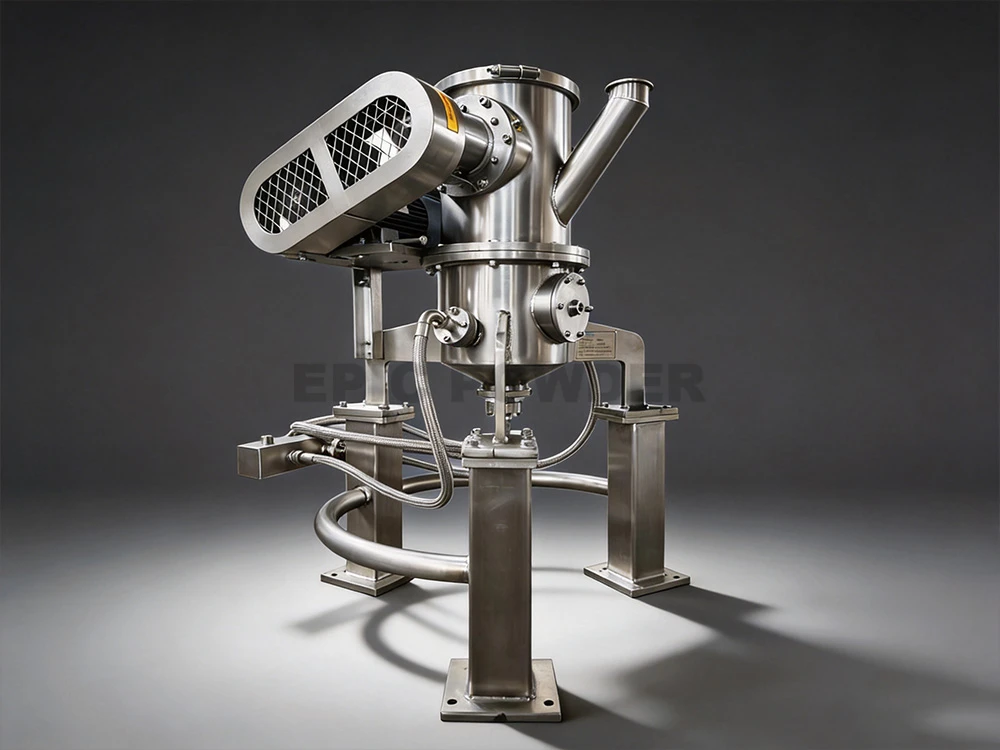
La forma más fiable de evitar la contaminación por hierro en el molido de materiales para baterías es eliminar por completo los componentes mecánicos de molienda. Utilizando un Molino de chorro totalmente cerámico para materiales de baterías depende de alta pureza boquilla de molino de chorro matrices y un lecho de gas fluidizado para impulsar colisiones partícula contra partícula. Confiando en equipos especializados de fresado por chorro Garantiza la ausencia total de contacto metálico durante todo el proceso de micronización.
Ingeniería avanzada de fresadoras de perlas y turbo
Para la molienda húmeda de alta energía y la dispersión ultrafina, combinamos rotores cerámicos no metálicos con alta densidad. Medios de zirconia estabilizada con itria (YTZ)Esta configuración mantiene una precisión control de la distribución del tamaño de partícula (PSD) para polvo ultrafino sin introducir partículas metálicas de desgaste en el producto final.
Separación magnética multietapa de alto Gauss
Incluso con revestimientos de cámara no metálicos, capturar cada partícula metálica microscópica requiere una extracción activa de alta intensidad. Para estrictamente evitar la contaminación por hierro en la molienda del material de la bateríaImplementamos una estrategia de separación magnética multietapa que elimina tanto los residuos de desgaste ferrosos gruesos como los contaminantes paramagnéticos submicrométricos.
Sistemas permanentes de neodimio de tierras raras
Colocamos filtros de cajón de neodimio-hierro-boro (NdFeB) de alta energía, rejillas magnéticas e imanes cónicos directamente en los puntos de descarga de los equipos.
- Intensidad del campo: De 8.000 a más de 12.000 Gauss
- Función principal: Captura instantáneamente partículas metálicas ferromagnéticas gruesas y fragmentos de desgaste de mayor tamaño justo cuando el polvo sale del molino.
- Operación: Diseñado con manguitos de purga automatizados de liberación rápida para minimizar el tiempo de inactividad durante los ciclos de limpieza continuos.
Separadores electromagnéticos de alta intensidad
Los imanes permanentes estándar tienen dificultades para capturar partículas finas de hierro submicrométricas o materiales débilmente magnéticos como el acero inoxidable 304 y 316. Para solucionar este problema, utilizamos separadores de matriz electromagnética activos de alta intensidad.
- Intensidad del campo: Alcanzando hasta 19.500 Gauss
- Impurezas objetivo: Partículas paramagnéticas submicrométricas de acero inoxidable y polvo ferroso fino.
- Control de pureza: Fundamental para mantener los incrementos totales de impurezas magnéticas por debajo de 20 PPB, especialmente en aplicaciones exigentes. Líneas de producción de molienda ultrafina de fosfato de hierro y litio.
Colocación estratégica en múltiples etapas
La separación magnética de una sola pasada es insuficiente para materiales aptos para baterías. Estructuramos la extracción a través de tres puntos de control críticos del proceso:
| Punto de extracción | Tipo de equipo | Impureza objetivo |
|---|---|---|
| Entrada de materia prima | Rejillas de NdFeB de 8.000–10.000 Gauss | Hierro variocolor a granel e impurezas de materia prima |
| Post-molienda / Pre-tamizado | Matriz electromagnética de 19.500 Gauss | Restos de desgaste microscópicos generados durante un impacto de alta energía |
| Descarga de envases | Filtros de cajón de neodimio-febisco de más de 12.000 gauss | Puerta de seguridad inmediatamente antes del embalaje a granel. |
Este enfoque sistemático evita que la contaminación metálica llegue a los polvos del cátodo y el ánodo de la batería final, eliminando los riesgos de microcortocircuitos en el origen.
Control de procesos ambientales y atmosféricos
Para evitar eficazmente la contaminación por hierro durante el proceso de molienda de materiales para baterías, el blindaje físico por sí solo no es suficiente. La entrada de polvo ambiental, las fluctuaciones de humedad y el oxígeno atmosférico pueden introducir silenciosamente impurezas metálicas o provocar oxidación que desgasta los equipos de procesamiento. Implementamos estrictos controles atmosféricos de circuito cerrado en cada fase del proceso de molienda.
Estrategias de control atmosférico
- Sistemas de recirculación de circuito cerrado selladosMantener diferenciales de presión sellados de forma continua garantiza la ausencia total de entrada de polvo ambiental, manteniendo los contaminantes externos transportados por el aire completamente fuera del sistema.
- Inertización con gas (N2, Ar, CO2): Operar bajo una atmósfera inerte elimina las reacciones de oxidación química que degradan los revestimientos del sistema y aceleran la corrosión metálica. Esta protección de gas es esencial durante el procesamiento de materiales de baterías, especialmente al ejecutar modificación de la granulación secundaria y el recubrimiento del grafito artificial donde se requiere una pureza de gas ultrapura.
- Gestión del incremento de humedad: Aplicar un control estricto de la humedad mantiene los aumentos de humedad bajo control 50 ppmControlar la humedad ambiental evita la aglomeración del polvo, elimina la acumulación de carga estática y detiene la microcorrosión en las superficies metálicas antes de que los residuos de desgaste puedan entrar en el flujo del material.
Métricas de control ambiental
| Parámetro del proceso | Estrategia operativa | Objetivo de pureza |
|---|---|---|
| Aislamiento de aire | Sistema de recirculación de gas de circuito cerrado totalmente sellado. | Bloquea el polvo externo y las finas partículas de hierro en suspensión en el aire. |
| Atmósfera inerte | Inertización continua con gas N2, Ar o CO2 | Elimina la oxidación y corrosión de los equipos. |
| Control de humedad | Monitorización en línea del punto de rocío y secado de gases | Mantiene <50 ppm absorción de humedad |
Protocolos de garantía de calidad, pruebas y validación
Aplicamos un marco de pruebas de múltiples niveles para verificar que no queden contaminantes metálicos tras el proceso de molienda. Para evitar la contaminación por hierro en el material de las baterías, reduciéndola a niveles de partes por mil millones, se requieren herramientas analíticas precisas y rutinas de muestreo estandarizadas en cada etapa del procesamiento.
Análisis y verificación de pureza
- ICP-MS / ICP-OES (Análisis químico de ultratrazas): Utilizamos espectrometría de masas de plasma acoplado inductivamente y espectrometría de emisión óptica para detectar impurezas metálicas traza de hasta niveles de ppb de un solo dígito. Este análisis de ultratrazas garantiza que el polvo final cumpla con el estricto umbral de incremento de impurezas magnéticas (<20 ppb) necesario para la seguridad de las celdas de alta energía.
- SEM-EDS (Identificación Morfológica del Hierro): La microscopía electrónica de barrido combinada con la espectroscopia de rayos X de energía dispersiva permite aislar partículas metálicas individuales. Al analizar la morfología, el tamaño y la composición elemental de los residuos ferrosos aislados, podemos rastrear la contaminación directamente hasta su origen, ya sea por juntas de válvulas desgastadas, conductos o materia prima.
- Pruebas de extracción magnética (auditoría continua): Se implementan protocolos estandarizados de muestreo magnético en puntos de control críticos, incluyendo la descarga posterior al fresado y el empaquetado final a granel. Las auditorías continuas de barras magnéticas extraen muestras representativas durante las ejecuciones de producción en vivo para verificar la eficiencia operativa en tiempo real de las unidades de matriz electromagnética posteriores.
Este riguroso protocolo de validación está integrado directamente en nuestras instalaciones especializadas, incluyendo nuestras Línea de producción de molienda ultrafina de material ternario monocristalino, garantizando el estricto cumplimiento de los estándares de pureza y la obtención de un polvo sin defectos.
Preguntas frecuentes
Contaminación microscópica por hierro y fallo celular
Los residuos de desgaste ferrosos microscópicos provocan fallos catastróficos en las baterías de iones de litio debido al crecimiento de dendritas:
- Disolución de electrolitos: Las partículas de hierro libres en el cátodo se disuelven en el electrolito líquido como iones Fe²⁺ durante la carga.
- Migración de ánodos: Los iones disueltos migran a través del separador hacia el ánodo debido al potencial de voltaje.
- Formación de dendritas: Los iones se reducen y vuelven a formar agujas de hierro metálico (dendritas) en la superficie del ánodo.
- Microcortocircuitos: Las dendritas de hierro perforan la membrana separadora, lo que provoca una alta autodescarga, puntos calientes localizados y un desbordamiento térmico.
Umbrales objetivo para el incremento de impurezas magnéticas
Mantener estándares de pureza estrictos requiere que el incremento de impurezas magnéticas se mantenga cerca de cero durante la molienda fina:
| Grado de calidad del material | Incremento de impurezas magnéticas objetivo | Aplicaciones típicas |
|---|---|---|
| Grado EV (Premium) | <20 PPB | Ánodos de NCM, NCA y silicio-carbono con alto contenido de níquel |
| Grado de almacenamiento de energía | <50 PPB | Materiales catódicos LFP estándar y grafito sintético |
| Grado industrial | <100 PPB | Materiales precursores y químicas de baterías de bajo voltaje |
Fresado por chorro cerámico completo frente a fresado mecánico convencional
Los molinos de pines y de bolas convencionales se basan en impulsores metálicos de alta velocidad o bolas de molienda de acero que desprenden continuamente trazas de hierro en el flujo de polvo.
En nuestra experiencia en ingeniería de polvos, la molienda por chorro en lecho fluidizado totalmente cerámico elimina por completo el contacto mecánico metal-polvo. La cámara de molienda, la boquilla del molino de chorro, la rueda clasificadora y los conductos utilizan un revestimiento no metálico de alta pureza, como carburo de silicio (SiC) o zirconia estabilizada con itria (YTZ). El aire comprimido o el gas inerte aceleran las partículas en bruto para que colisionen entre sí en lugar de golpear las paredes del molino. Este enfoque permite a los procesadores obtener resultados precisos. controlar el tamaño de partícula del fosfato de hierro y litio sin añadir residuos de desgaste ferrosos.
Mecánica de separación magnética de alta intensidad
Los imanes permanentes de neodimio estándar (de 8.000 a 12.000 Gauss) capturan eficazmente el hierro ferromagnético residual, pero tienen dificultades con el acero inoxidable endurecido por deformación (304/316) y las partículas finas submicrométricas.
Los separadores electromagnéticos de alta intensidad superan esto al generar intensidades de campo de fondo de hasta 19.500 Gauss a través de una matriz especializada:
- Magnificación por gradiente de campo: Los finos bordes de la matriz concentran el flujo magnético, creando gradientes de campo extremos.
- Captura paramagnética: Las partículas finas de acero inoxidable débilmente paramagnéticas experimentan una fuerza magnética suficiente para superar la resistencia del fluido y la gravedad.
- Lavado automatizado: La desmagnetización periódica de la matriz libera los contaminantes atrapados en una suspensión separada o en la descarga de un colector de polvo, lo que garantiza una pureza continua de la línea.